
last updated February 15, 2026Architectures of Vibration
Architectures of Vibration is a long-term research program that brings architectural and environmental history into conversation with STS and the history of science, technology, and media. It traces how vibration became a modern phenomenotechnique for producing environmental knowledge—and how that knowledge was stabilized in built form and scaled through infrastructure—from the long nineteenth century to the present. Across three interwoven projects, a recurrent chain unfolds: oscillations are registered as signals, staged in architectural settings that regulate exposure and interference, and circulated through networks that turn local events into models of planetary processes and habitability.

AoV I c. 1750-1930
Vibratory Enlightenment: Environmental Control, Seismic Colonialism, and Architectural Intermediaries of the Earth
AoV I traces the emergence of vibration as an environmental problem and epistemic resource from Enlightenment wave-thinking to the institutionalization of modern geophysics. It shows how architectural forms—observatories, stations, and experimental enclosures—operated as intermediaries that filtered, insulated, and calibrated the Earth’s motions, turning oscillations into evidence. In colonial settings, these techniques helped scale local registrations into planetary claims, linking environmental control to infrastructures of imperial knowledge.
-
“Colonial Waves from Apia to Yap: Technoscientific Network Architectures of German Expansionism in Oceania” in Architecture in Oceania (1840-1970): Para-Colonial Influences – Colonial Transactions – Postcolonial Legacies, ed. Michael Falser. Leuven: Leuven University Press, 2025.
"Planetary Disequilibrium" in Sick Architecture, ed. Beatriz Colomina. Cambridge, MA: MIT Press, 2025.
"Vibration als Phänomenotechnik in den Umweltkonzeptionen der Moderne" in Wahrnehmungskräfte - Kräfte wahrnehmen: Dynamiken der Sinne in Wissenschaft, Kunst und Literatur, edited by Frank Fehrenbach, Laura Isengard, Gerd Micheluzzi, Cornelia Zumbusch, 391-420. Berlin: De Gruyter, 2024.
“Seismischer Kolonialismus, Architektur und die Triangulierung der Welt. Das Geophysikalische Samoa-Observatorium in Apia (1902-1914)” in Deutsch-koloniale Baukulturen: Eine globale Architekturgeschichte in 100 visuellenPrimärquellen, edited by Michael Falser, 58-61, Zentralinstitut für Kunstgeschichte München (Passau: Klinger, 2023).
"Spatialising Imponderables: Vibratory Logics of Environmental Control"trans 40: Phantasma (2022): 43-48.
"Crafting Interiority, or the Evolutionary Objectivity of Vibrating Worlds" [An Introduction to and Translation of Adolf Behne's "Biology and Cubism" (1915)] react/review, vol. 2, The Sprit in the Shadow (March 2022): 26-41, 42-56.
"Modern Vibrations: Tapping into the Ambient Medium" PNYX 65, AA Architectural Association School of Architecture, London, 2019: n.p.
-
Apr-4-5, 2025 | Cambridge Talks: Acts of Scaling (Harvard University, GSD)
Feb-20, 2024 | M+M Program in Media and Modernity (Princeton University)
Sep-21, 2023 | SAH Society of Architectural Historians (Montréal, CA)
Dec-6, 2022 | Center for Advanced Studies “Imaginaria of Force” (University of Hamburg)
Oct-25, 2022 | MoMA Museum of Modern Art x DocTalks
Sep-18, 2022 | GSA German Studies Association Conference (Houston, TX)
Jun-30, 2022 | Para-Colonial – Colonial – Post-Colonial. Influences and Transactions in the Architecture of Oceania (1840–1990) (Auckland, NZ)
-
German Colonial Building Cultures [at] ZI (Zentral Institut für Kunstgeschichte) | Munich, Germany 2023
Sick Architecture [at] CIVA | Brussels, Belgium 2022

AoV II c. 1930-1980
The Total Environment of Vibe: Sensory Substitution Design, Technologies of the Self, and the Technics of the Other
AoV II examines the mid-century moment when vibration becomes an immersive medium rather than a disturbance to be contained. Following cybernetics, media technologies, and experiments in sensory substitution design, it tracks how designers and technoscientists reimagined architecture as a responsive ambience—an operative environment built from feedback loops between bodies, instruments, and space. The project reads “vibe” as a technopolitical problem of modulation: of attention, excitation, and perception.
-
“The Vibration Sense: Pallaesthesia, Sensory Substitution Design, and the Reformation of a Sixth Sense in the Early Twentieth Century,” in The Routledge History of the Senses, eds. Andrew Kettler and William Tullett, 165-189. New York: Routledge 2025.
"Vibration als Phänomenotechnik in den Umweltkonzeptionen der Moderne" in Wahrnehmungskräfte - Kräfte wahrnehmen: Dynamiken der Sinne in Wissenschaft, Kunst und Literatur, edited by Frank Fehrenbach, Laura Isengard, Gerd Micheluzzi, Cornelia Zumbusch, 391-420. Berlin: De Gruyter, 2024.
"Vibe, c. 1969: The Technicity of Operative Ambience in Jimi Hendrix's Electric Lady Studios" in The Sound of Architecture: Acoustic Atmospheres in Place, edited by Angeliki Sioli and Elisavet Kiourtsoglou, 71-86. Leuven: Leuven University Press, 2022.
-
Feb-6, 2024 | Extractive Media Lecture Series (University of Minnesota)
Mar-17, 2023 | More-than-Human Cities Lecture Series (Universiteit van Amsterdam)
Aug-5, 2020 | W. J. T. Mitchell Seminar (University of Chicago / USC University of Southern California)
Sep-21, 2019 | SAH Society of Architectural Historians Conference (Providence, RI)
-
Sick Architecture, CIVA Brussels, curated by Beatriz Colomina and Nikolaus Hirsch
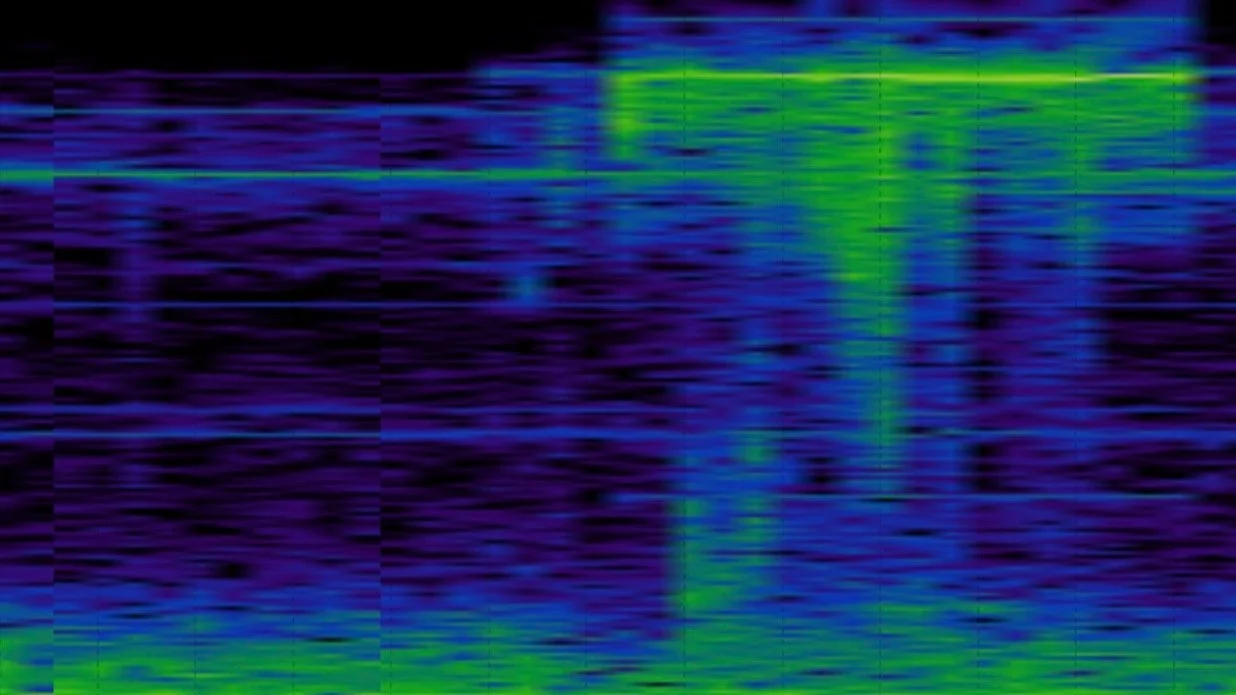
AoV III c. 1980-beyond
Sensory Fields: Alien Resonances, Planetary Intelligence, and the Vibratory Continuum of Life–Lyfe
AoV III turns to contemporary planetary sensing and astrobiology, where resonance is mobilized to infer planetary interiors, environments, and life signatures. It follows how vibration-based methods—seismic monitoring, electromagnetic detection, and environmental modeling—travel from terrestrial infrastructures into interplanetary missions, reframing what counts as evidence of habitability and intelligence. At this horizon, vibration becomes a speculative medium for thinking planetary cognition and the life–lyfe continuum beyond Earth.
-
Our Planetary Condition: Foundations for a Politics with the Earth. Cambridge, MA: The MIT Press, 2026.
"Planetary Disequilibrium,"Sick Architecture, ed. Beatriz Colomina. Cambridge, MA: MIT Press, 2025.
Planetary Forest. Berlin: DISTANZ, 2024.
"Vibrascapes: Contact Zones and Planetary Media,"koozArch (June 2022)
"Planetary Disequilibrium,"e-flux Architecture, Sick Architecture series (May 2022)
"Spatialising Imponderables: Vibratory Logics of Environmental Control," trans 40: Phantasma (2022): 43-48.
-
May-14-15, 2025 | Scales of Life Symposium, ICI Berlin
May-10, 2022 | Panel on Planetary Thinking (JLU Giessen)
May-6, 2022 | Sick Architecture Symposium, CIVA Brussels
-
2022 | Sick Architecture, CIVA Brussels
2022 | Planetary Forest, Neuer Kunstverein Giessen
2021 | The Future of __Space // Reflections, A+D Architecture and Design Museum Los Angeles
2020 | Working Remotely, a83 Gallery New York City
2020 | The Future of __Space, A+D Architecture and Design Museum Los Angeles